To prepare for a doctor appointment, write down your main concerns, note any symptoms and when they started, update your medication list, and gather relevant records. Confirm the appointment details and any preparation instructions. Before leaving the visit, make sure you understand the next steps and how you will receive results.
You do not need a perfect medical history or a folder full of research. The goal is to give your doctor an accurate picture of what has changed, what matters to you, and what you need help with.
Confirm What the Appointment Is For
Check whether you are booked for a routine checkup, a new symptom, a medication review, or a specialist consultation. Tell the office if the reason for your visit has changed or if you have several concerns; staff can advise whether you need a different appointment type or more time.
Confirm the location, arrival instructions, paperwork, and whether any referral or insurance authorization is required. Ask about likely costs if you are paying yourself or are unsure about coverage.
Follow the clinic’s own instructions rather than assuming every appointment requires the same preparation. UCSF includes advance instructions, identification, and insurance information among its recommendations for preparing for a visit.
Put Your Main Concern First
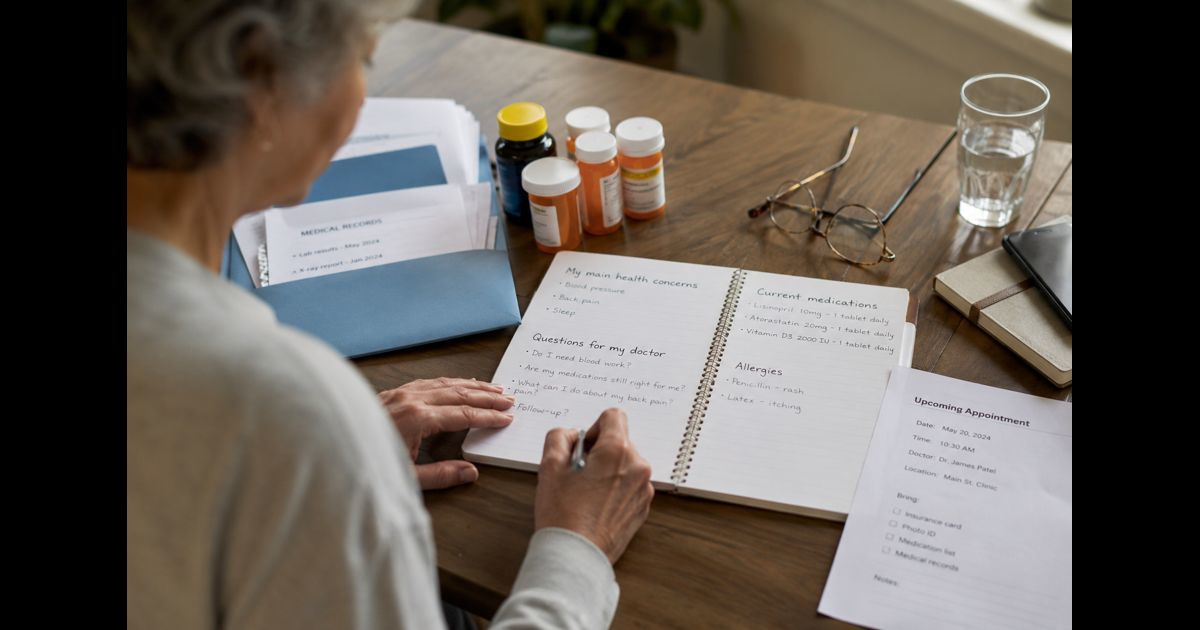
Make a short list of what you want to discuss, with your most important concern at the top. Bring up that concern early, even if it feels embarrassing or difficult to explain. The National Institute on Aging recommends prioritizing concerns instead of saving the most important issue for the end.
It helps to separate the problem from the outcome you want:
- Problem: “My knee has been hurting when I use stairs.”
- Impact: “I have stopped taking my usual walk.”
- Goal: “I want to understand what may be causing it and what activity is appropriate.”
This example is a communication tool, not a suggested diagnosis. Your doctor may need to prioritize a different issue if there is a more urgent concern.
Write a Brief Symptom Timeline
If you are coming because something feels wrong, describe what you have noticed in ordinary language. You do not need to name a condition.
Useful notes include when the symptom began, where it occurs, how often it happens, how long it lasts, and whether it is changing. Record anything that seems to trigger or relieve it, along with its effect on normal activities. Tufts Medicine recommends a symptom diary that captures timing, location, intensity, and patterns.
For example, “The discomfort started last Tuesday and happens after long periods of sitting” is more informative than “It happens sometimes.” If you cannot remember the exact date, say so rather than guessing.
Keep notes proportionate to the problem. A short timeline is usually easier to discuss than pages of unorganized observations.
Update Your Medication and Allergy Information
Prepare a current list of everything you take, including prescriptions, nonprescription medicines, vitamins, herbal products, and other supplements. Include the name, strength, and how much and how often you actually take it. Bringing the containers may help when names or doses are unclear.
Tell your doctor about missed doses, medicines you stopped, unwanted effects, and anything you cannot afford. Also list allergies and describe the reaction you experienced. Honest information helps the clinician assess your situation; it is not a test of whether you have followed every instruction perfectly.
Gather Relevant Records
Bring or arrange access to recent reports, hospital discharge summaries, and specialist letters that relate to the visit. Do not assume records from another organization are automatically visible to your doctor.
For a first appointment, include important diagnoses, previous operations, and relevant family health history. If something is unknown, mark it as unknown. Tufts Medicine recommends gathering records before meeting a new doctor so that earlier care can inform the consultation.
For a follow-up, focus on what changed since the previous visit: symptoms, treatment effects, new medicines, or care received elsewhere. The National Institute on Aging also recommends sharing relevant changes in sleep, appetite, energy, and daily life.
Do Not Fast or Stop Medicines Without Instructions
A doctor appointment does not automatically require fasting. Some blood tests need specific preparation; others do not.
If tests are planned, ask whether you may eat or drink beforehand and how to handle your usual medicines. Do not stop prescribed treatment on your own to prepare for the visit. If instructions are unclear, contact the care team before making changes.
If you were told to fast but ate or drank something outside the instructions, tell the clinic. Hiding it can affect how a test is handled or interpreted.
Plan for Communication and Support
Consider whether a trusted person would help you remember details or take notes. Agree beforehand on their role so that you still have space to speak for yourself. Ask the office about interpreter or accessibility support if needed.
Keep your written concerns somewhere easy to reach. For a video visit, have the same notes and medication information beside you, and check the connection and audio beforehand. A quiet, private setting makes it easier to discuss personal information.
Use a One-Page Appointment Note
Copy this simple layout into a notebook or phone:
|
Item |
What to write |
|
Main reason for visiting |
The concern you most want addressed |
|
Symptom summary |
Start date, pattern, changes, daily impact |
|
Medicines and allergies |
Current list and reactions |
|
Relevant history |
Recent care, tests, or major changes |
|
Main question |
What you need to understand today |
|
Agreed plan |
Fill in during the appointment |
|
Follow-up |
Results, contact details, and next appointment |
This is an organizational aid, not a requirement for receiving care. Missing records or incomplete notes should not prevent you from explaining a concern.
Leave With a Clear Next Step
Before the visit ends, confirm what happens next: a test, treatment, referral, monitoring, or another appointment. Ask when to expect results and whom to contact if they do not arrive.
Explain the plan back in your own words if you are unsure you understood it. Also ask what changes should prompt an earlier call. MedlinePlus recommends clarifying follow-up and contacting the provider about worsening symptoms, treatment problems, or unanswered questions.
Final Thoughts
Good appointment preparation is about clarity, not volume. A prioritized concern, a brief timeline, accurate medication information, and a clear follow-up plan can make the conversation more useful. Follow instructions specific to your visit, and tell the clinic when something is unclear.
Frequently Asked Questions
What should I bring to my first doctor appointment?
Bring the identification and insurance information the clinic requests, your medication and allergy list, relevant medical records, and a short list of concerns. Ask the office in advance whether it needs additional forms or referrals.
What if I have several health concerns?
Mention the full list at the beginning and identify your main priority. You and the clinician can decide what to address during that visit and whether another appointment is needed.
Can I eat before a doctor appointment?
Usually there is no reason to fast for the appointment itself, but planned tests or procedures may have specific requirements. Follow your care team’s instructions rather than fasting automatically.
What if I cannot remember my medical history?
Share what you know and be clear about what you do not remember. Bring available records or the names of previous providers so the clinic can advise on obtaining missing information.